In the war-torn city of El Fasher, Manal Abdullah’s desperate three-hour journey with her children was more than an escape — it was a fight for survival through shellfire, drones, and chaos that now define life in Sudan’s Darfur region.
The decision to flee:
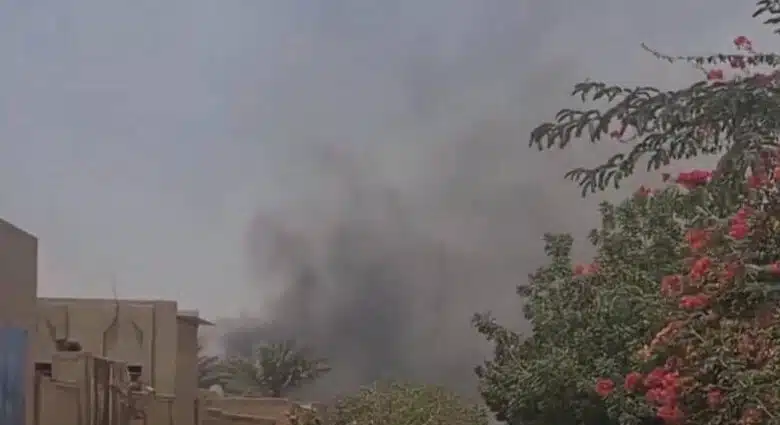
Manal told Al-Rai Al-Sudani she was forced to leave her home in Al-Shurfa, near the army headquarters, after Rapid Support Forces (RSF) units advanced into the neighborhood. “Our house was hit by artillery last Wednesday,” she said. “One room and my brother’s old car were destroyed. Staying became impossible.”
A night of terror:
Joined by other families, Manal and her children began walking north of the city under cover of darkness. The journey lasted over three hours, punctuated by halts to hide from snipers. “We moved a few meters, then crouched down again,” she recalled. “We could barely breathe — watching the sky for drones and the ground for danger.”
Confrontation with the RSF:
In the northeastern corridor, their group was stopped by RSF fighters. The men were interrogated and several beaten for alleged ties to the joint forces before being taken away. One militiaman shouted at the civilians, “You’ve had enough of your army’s rule; now your time is over.”
Through the Milait Gate — at a price:
“There were sixteen of us,” Manal said. “They let us pass only after we paid money.” From there, the group reached Turrah, where a Starlink connection allowed them to contact relatives and receive small cash transfers to continue their flight.
From Turrah to Milait:
After three days in Turrah, they traveled by donkey carts to Umm Marahik, spending two more nights before finding a Land Rover to Milait, some 65 km north of El Fasher.
Echoes of a broken city:
Manal described El Fasher as “a city of hunger and silence,” with hundreds fleeing from Al-Nassr, Al-Shurfa, and Al-Karanik neighborhoods. “We drank rainwater and ate once a day,” she said. “Sometimes we searched the charity kitchens for food, but most days there was none.”
Death everywhere:
“The smell of blood was constant,” she recalled softly. “I lost six relatives. We couldn’t even find shrouds — I had to tear bed sheets from my closet.”
A memory of loss:
In June 2024, her husband was killed when a shell struck his shop in the city’s main market during heavy fighting. “He never came home,” she said, her voice breaking.
Civilians trapped:
Thousands remain trapped in crowded shelters inside El Fasher, facing shortages of food, clean water, and medicine. “People are desperate to leave,” Manal warned, “but the roads are deadly.”
Waiting for the unknown:
After more than eighty years of family roots in Al-Shurfa, Manal fled on Thursday. Now in Milait, she says, “We’ve escaped the city, but not the fear. I don’t know where we’ll go next — only that we’re still alive.”