
Red Alert: Sudan Faces Deadly Nile Floods Amid Massive Water Release from Ethiopia’s GERD

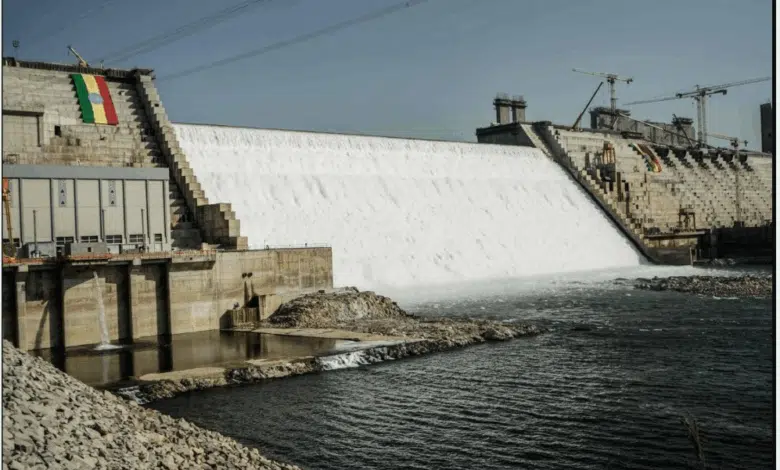
Sudan’s Early Warning Unit under the Ministry of Agriculture and Irrigation has issued a red alert—the highest danger level—warning of major flooding along the Nile from Sunday morning through Tuesday evening.
The alert covers Blue Nile, Sennar, Khartoum, River Nile, and White Nile states, as well as key stations including Khartoum, Shendi, Atbara, Berber, and Jebel Aulia. Authorities urged residents to avoid low-lying areas and flood-prone roads, calling for strict adherence to safety directives to minimize potential losses.
GERD at the Heart of the Crisis
Meteorologist Mundhir Ahmed Al-Haj clarified that the current floods are not primarily caused by rainfall as widely assumed, but by the opening of gates at Ethiopia’s Grand Renaissance Dam (GERD).
He explained that delaying the sixth filling phase until after September—while maintaining only one spillway open since June—could have prevented the floods. “It’s God’s will,” he added, “but we hope this flood brings some agricultural benefit by expanding arable lands.”
Unprecedented Water Discharge
Egyptian water resources expert Dr. Abbas Sharaky, professor of geology at Cairo University, said that Ethiopia has begun releasing unusually large volumes of water from the GERD reservoir, a first for this time of year.
Speaking to Hazrat Al-Muwatin TV program, Dr. Sharaky revealed that approximately 750 million cubic meters of water have been discharged daily for three consecutive days, making Sudan the most exposed country to the resulting flood surge.
Sudan in the Storm’s Path — Egypt Shielded
According to Sharaky, Sudan is bearing the brunt of the impact due to the absence of coordination mechanisms with Ethiopia. Meanwhile, Egypt remains safe, as the Aswan High Dam absorbs the excess flow into Lake Nasser, acting as a crucial buffer.
He warned that Sudan’s agricultural season has already been disrupted, as farmers rely on July and August rains to begin cultivation. “The flooding,” he said, “could have devastating economic and agricultural repercussions.”
Urgent Need for Coordination Mechanism
Experts from both countries stressed that the lack of real-time coordination between Sudan, Egypt, and Ethiopia over the dam’s operations leaves millions vulnerable to unpredictable floods.
Sharaky urged the creation of a joint trilateral mechanism to ensure transparent data sharing and synchronized dam management, preventing future disasters and protecting citizens, agriculture, and regional economies.







I will immediately take hold of your rss as I can not in finding your email subscription hyperlink or e-newsletter service. Do you have any? Kindly permit me know so that I may just subscribe. Thanks.